
Walk into any tech marketplace in 2026, and you’ll witness something fascinating: people actively hunting for the iPhone 12 a smartphone that first launched back in October 2020. While flagship chasers obsess over the latest iPhone 17 Pro Max with its groundbreaking features, a massive segment of smart buyers asks a different question: “Is the iPhone 12 still worth it in 2026?” The numbers tell a compelling story. Refurbished iPhone 12 units are flying off shelves, dominating the used smartphone market, and generating more search queries than some brand-new mid-range devices. But here’s the uncomfortable truth most tech reviewers won’t admit: buying a 5-year-old flagship in 2026 is a gamble that could either be brilliantly strategic or financially foolish. This isn’t another hype-filled review claiming every old iPhone is “still amazing” or pushing you toward expensive upgrades you don’t need. This is the honest, no-nonsense analysis you deserve covering real-world performance, hidden problems, actual battery degradation, software support reality, and the critical question: does the iPhone 12 deliver genuine value in 2026, or are you buying outdated technology dressed in Apple’s premium branding? Whether you’re a student on a tight budget, someone exploring their first iOS device, or a savvy buyer navigating the refurbished market, the next 8 minutes will reveal everything you need to make the smartest decision.
Quick Specs Overview: iPhone 12 Through 2026 Lens
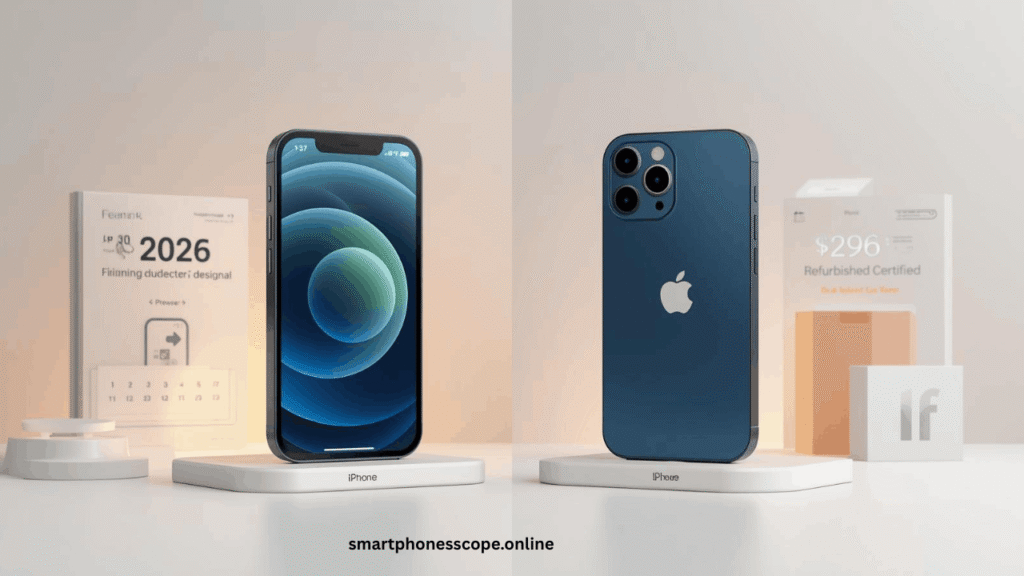
Before diving into real-world performance, let’s establish what the iPhone 12 actually offers in 2026’s competitive landscape. At its core sits the A14 Bionic chip Apple’s first 5-nanometer processor that was revolutionary in 2020 but now competes against the A18 chip in current iPhones. The device features a 6.1-inch Super Retina XDR OLED display with 2532×1170 resolution, delivering stunning colors and deep blacks that still impress today.
The 5G connectivity that was groundbreaking at launch is now standard, but the iPhone 12’s implementation remains solid for everyday use. MagSafe technology introduced a magnetic wireless charging ecosystem that’s expanded significantly, meaning your 2026 accessory options are actually better than at launch. The dual 12MP camera system (wide and ultra-wide) supports 4K Dolby Vision HDR recording a feature that remains competitive.
Here’s where reality bites: the phone shipped with iOS 14 and currently runs iOS 18 (as of early 2026), but Apple’s typical 6-7 year update cycle means major iOS updates might end soon. Storage options range from 64GB to 256GB, though finding new units is nearly impossible you’re shopping in the refurbished and used market where 128GB models dominate availability.
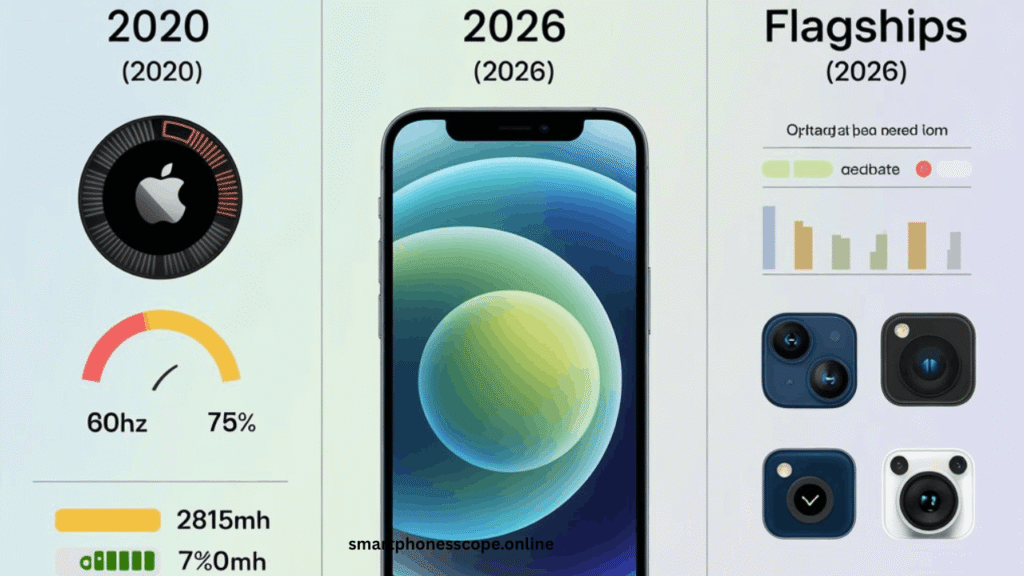
| Specification | iPhone 12 (2020) | 2026 Relevance |
|---|---|---|
| Processor | A14 Bionic | Mid-range by 2026 standards |
| Display | 6.1″ OLED, 60Hz | OLED good, 60Hz dated |
| 5G | Sub-6GHz + mmWave | Standard feature now |
| Camera | Dual 12MP | Decent, not flagship-level |
| Battery | 2815 mAh | Small by modern standards |
| Software | iOS 14-18 | Updates ending soon |
The specs sheet reveals a pattern: core hardware remains functional, but certain aspects particularly the 60Hz display and modest battery capacity expose the device’s age.
Design & Build Quality: Does Premium Still Mean Premium?
The iPhone 12’s flat-edge design was Apple’s bold return to the iPhone 4/5 aesthetic, and it genuinely holds up in 2026. Unlike curved-edge phones that feel slippery, these squared aluminum rails provide confident grip and timeless sophistication. The aerospace-grade aluminum frame and glass back create a premium feel that cheaper phones can’t replicate, even with their plastic “premium” builds.
Ceramic Shield front glass technology promised 4x better drop protection than previous iPhones. Real-world results? It’s genuinely tougher than standard glass, though not indestructible. Used iPhone 12 units often show micro-scratches on the display after years of pocket time, but catastrophic cracks are less common than older models assuming previous owners weren’t reckless.
Compared to 2026’s ultra-thin flagships, the iPhone 12’s 164-gram weight feels substantial but not heavy. The 7.4mm thickness is perfectly manageable, though modern phones have achieved similar screen sizes in slimmer profiles. Color options (black, white, red, green, blue, purple) remain attractive, with the Pacific Blue and Product Red variants holding resale value slightly better.
The brutal honesty: yes, this phone still feels premium when you hold it. No cheap creaks, no flimsy buttons, no questionable build tolerances. However, after 4-5 years of use, expect minor wear slightly loose buttons, charging port debris accumulation, and potential frame scuffs. These aren’t deal breakers but remind you this is a mature device, not a fresh flagship.
Display Quality in 2026: OLED Excellence Meets Refresh Rate Reality
The Super Retina XDR OLED display remains the iPhone 12’s strongest visual asset. Blacks are truly black, colors pop with accuracy, and HDR content looks spectacular. Compared to budget phones with mediocre LCD panels, the difference is immediately obvious. Even against mid-range OLEDs, Apple’s color calibration and brightness consistency stand out.
Peak brightness reaches 1200 nits for HDR content and around 625 nits typical maximum—adequate for outdoor visibility but noticeably dimmer than 2026 flagships pushing 2000+ nits. In direct sunlight, you’ll squint occasionally, whereas newer phones remain perfectly readable. For indoor use and normal outdoor conditions, brightness is completely fine.
Now the elephant in the room: 60Hz refresh rate. While the iPhone 12 launched, 90Hz and 120Hz displays were becoming standard on Android flagships. In 2026, even budget phones sport 90Hz panels, making the iPhone 12’s 60Hz feel noticeably less smooth. Scrolling through social media, swiping between apps, and gaming all lack that buttery fluidity modern users expect.
Is 60Hz a deal breaker? Depends on your experience. If you’ve never used 90Hz+ displays extensively, the iPhone 12 feels perfectly smooth iOS animations are well-optimized. But if you’re switching from a 120Hz Android or newer iPhone, the downgrade is jarring for the first week. Most users adapt, but the limitation remains glaring when comparing side-by-side with contemporary devices.
Display Verdict: Beautiful colors and OLED quality, but the refresh rate gap widens every year.
Performance Test: A14 Bionic Chip Facing 2026 Reality
The A14 Bionic was a beast in 2020, and in 2026, it’s still surprisingly capable—with important caveats. For everyday tasks like browsing Safari, scrolling Instagram, watching YouTube, using messaging apps, and checking email, performance is flawless. Apps open instantly, multitasking between 6-8 apps works smoothly, and iOS 18’s optimizations keep the experience responsive.
Gaming performance reveals the age. Popular titles like PUBG Mobile, Call of Duty Mobile, and Genshin Impact run well at medium-high settings but struggle with maximum graphics at consistent frame rates. The 60Hz display actually helps here—the chip isn’t fighting to push 120fps. Casual games and older titles run perfectly. Competitive gamers seeking every advantage should look elsewhere, but casual gaming remains enjoyable.
Multitasking handles typical use cases—music playing while browsing, picture-in-picture video, background app refreshes—without hiccups. However, heavy multitaskers running professional apps, video editors using iMovie with 4K footage, or users juggling 15+ apps simultaneously will notice occasional reloads and minor stutters.
The concerning issue: thermal management. Extended gaming sessions, 4K video recording, or processor-intensive tasks generate noticeable warmth. This isn’t dangerous overheating, but the device becomes uncomfortably warm to hold. Thermal throttling kicks in, reducing performance to manage heat frustrating during critical moments.
Performance Reality: Daily use? Excellent. Light gaming? Good. Heavy professional work or intense gaming? Showing its age.
iOS Updates & Software Support: The Ticking Clock
Here’s where Apple’s legendary software support shines and where reality introduces uncertainty. The iPhone 12 launched with iOS 14 and currently runs iOS 18 in early 2026. That’s an impressive 5+ years of major updates, something Android competitors rarely match. Security patches remain regular, and new features like widgets, Focus modes, and privacy enhancements have arrived consistently.
The critical question: how much longer? Apple typically supports iPhones for 6-7 years. The iPhone 12 reaching iOS 19 (expected late 2026) is probable but not guaranteed. Even if it receives iOS 19, it might be the final update, with support ending in 2027. For buyers in 2026, that means 1-2 years of guaranteed major updates remaining.
Security updates matter more than flashy features. Apple maintains security patches for 2-3 years beyond final iOS versions, meaning the iPhone 12 should receive critical security fixes until 2028-2029. For privacy-conscious users, this extended security support justifies purchase despite aging hardware.
The software experience in 2026 is smooth but shows limitations. Some iOS 18 features particularly AI-powered tools and advanced computational photography run slower or are restricted on the A14 chip. Apple prioritizes newer hardware for cutting-edge features, leaving older devices functional but not fully featured.
Software Verdict: Currently supported well, but you’re buying into the sunset years, not the sunrise.
Camera Performance: Still Good Enough for Real Life?
The dual 12MP camera system sparked fierce debates at launch was it enough against Android’s megapixel wars? In 2026, those debates feel quaint. Computational photography has evolved, and the iPhone 12’s cameras rely heavily on Apple’s processing to compete.
Daylight Photography: Reliably Excellent
Outdoor shots in good lighting remain the iPhone 12’s strength. Colors are accurate without over-saturation, dynamic range captures both bright skies and shadowed details, and the Smart HDR 3 system balances exposures beautifully. Photos look natural, not artificially enhanced. The ultra-wide camera provides creative flexibility for landscapes and group shots, though image quality drops slightly compared to the main sensor. For Instagram, Facebook, and casual photography, daylight performance satisfies completely. Detail and sharpness lag behind 2026 flagships with 48MP+ sensors, but average users won’t notice unless pixel-peeping.
Low-Light & Night Mode: Decent But Dated
Night mode was revolutionary in 2020, automatically activating in dim conditions to brighten scenes dramatically. In 2026, it still works—but newer phones produce cleaner low-light images with less noise and better detail retention. The iPhone 12’s night shots are usable and impressive for social media, but side-by-side comparisons reveal more grain, less sharpness, and slower processing than contemporary devices. Night mode requires steady hands; the 1-3 second exposures introduce blur if you’re shaky. For casual evening photos and dimly-lit restaurants, results are acceptable. Professional low-light photography demands newer hardware.
Video Recording: Standout Feature
This remains a compelling reason to choose iPhone 12 in 2026. 4K Dolby Vision HDR recording at 60fps produces cinema-quality footage with stunning dynamic range. Video stabilization is excellent, colors remain accurate, and audio capture through multiple microphones creates professional results. Content creators, vloggers, and anyone serious about video quality get flagship-tier performance here. Competing Android phones at similar 2026 prices rarely match this video prowess. The limitation is storage 4K HDR files are massive, making the 64GB model impractical for videographers.
Camera Verdict: Great for everyday photography and exceptional for video; won’t win pixel-peeping contests against 2026 flagships.
Battery Life Reality Check: The Uncomfortable Truth
Battery performance separates good used phone purchases from regrettable ones. The iPhone 12’s 2815mAh battery was modest even at launch, and after 4-5 years of charge cycles, reality becomes harsh. A brand-new iPhone 12 in 2020 delivered 6-7 hours screen-on time with mixed use. In 2026, you’re buying used or refurbished units with degraded batteries.
Battery health between 80-85% is common for well-maintained 4-5 year old iPhones. This translates to approximately 4-5 hours screen-on time with normal use social media browsing, messaging, light photography, and streaming. Power users draining battery through gaming, navigation, or continuous video recording might barely reach 3-4 hours. You’ll need midday charging or portable power banks for full-day reliability.
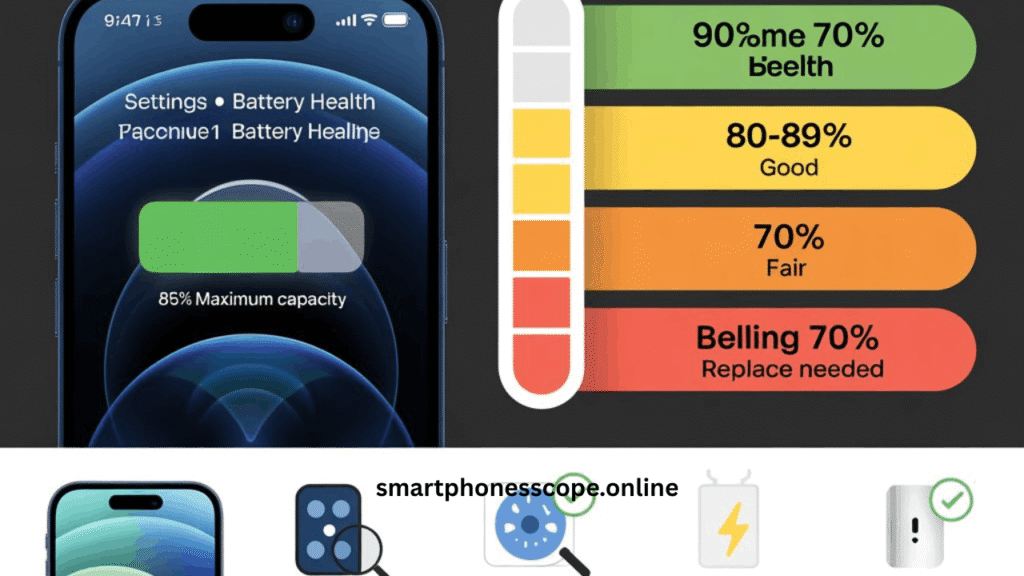
Checking battery health before purchase is non-negotiable. Navigate to Settings > Battery > Battery Health to see maximum capacity percentage. Above 85% is good, 80-85% acceptable, below 80% requires immediate battery replacement consideration. Sellers claiming “excellent battery” without showing actual health percentage are hiding degradation.
Battery replacement through Apple costs approximately $89 (prices vary by region), which adds to your total investment. Third-party replacements cost $40-60 but introduce quality uncertainty. A new battery restores near-original performance, making replacement worthwhile if you’re committed to keeping the phone 2+ years. However, factor this $89 into your budget a $300 iPhone 12 with $89 battery replacement effectively costs $389.
Battery Verdict: Plan for degraded battery life or budget for replacement; don’t expect all-day power from used units.
Charging & MagSafe in 2026: Convenience Meets Limitations
The iPhone 12 supports 20W wired fast charging, reaching 50% in approximately 30 minutes and full charge in 90-100 minutes. By 2026 standards, this is painfully slow flagship Android phones charge fully in 20-30 minutes with 65W-120W charging. The iPhone 12’s charging speed feels glacial in comparison, requiring patience and planning.
MagSafe wireless charging (15W maximum) was innovative at launch and remains the ecosystem’s highlight in 2026. The magnetic alignment ensures perfect coil positioning every time, and the accessory ecosystem has exploded MagSafe wallets, car mounts, battery packs, and charging stands are abundant and affordable. Standard Qi wireless charging (7.5W) also works, though slower.
The frustrating reality: Apple famously excluded the charging brick from the box. If you’re buying used, you likely receive only the phone, requiring separate charger purchase. A certified 20W USB-C adapter costs $19-25; MagSafe chargers run $25-40. Budget another $20-45 for charging equipment.
MagSafe accessories in 2026 offer better value than at the iPhone 12’s launch. Third-party options are plentiful, affordable, and well-reviewed. This mature ecosystem actually improves the ownership experience compared to 2020, when choices were limited and expensive.
Charging Verdict: Slow by modern standards but MagSafe ecosystem provides unique convenience; budget for accessories.
iPhone 12 Pros & Cons: The 2026 Balance Sheet
Pros:
✅ Premium OLED display with accurate colors and deep blacks
✅ Strong camera system, especially video recording capabilities
✅ Solid everyday performance for typical smartphone tasks
✅ Long Apple ecosystem support with regular security updates
✅ 5G connectivity for future-proof network speeds
✅ MagSafe ecosystem with abundant accessory options
✅ Premium build quality that feels flagship-grade
✅ iOS ecosystem integration (iMessage, FaceTime, AirDrop, iCloud)
Cons:
❌ 60Hz refresh rate feels dated compared to modern phones
❌ Average battery life, worse with degraded used batteries
❌ No charger included in box, requiring separate purchase
❌ Aging battery units in used market need health verification
❌ Modest storage on base 64GB model, insufficient for many users
❌ Limited future software support, updates ending within 1-2 years
❌ Slower charging speeds compared to 2026 Android competitors
❌ Thermal management struggles during intensive tasks
The pros-cons balance reveals a device with genuine strengths particularly display quality, video performance, and ecosystem benefits undermined by age-related weaknesses like battery degradation and approaching software obsolescence.
iPhone 12 vs New Budget Phones: 2026 Value Comparison
Choosing between a used flagship and new budget phone is the eternal dilemma. Here’s how the iPhone 12 stacks up:
| Feature | iPhone 12 (Used) | iPhone SE 2024 | Android Mid-Range |
|---|---|---|---|
| Display | 6.1″ OLED, 60Hz | 4.7″ LCD, 60Hz | 6.5″ AMOLED, 90-120Hz |
| Processor | A14 Bionic (2020) | A16 Bionic (2022) | Mid-range chipset |
| Camera | Dual 12MP, excellent video | Single 12MP | Triple/Quad varied quality |
| Software | iOS 18, 1-2 years left | iOS 18, 5+ years ahead | Android, varies by brand |
| Battery | Degraded, needs check | Brand new | Larger capacity, new |
| 5G | Yes | Yes | Yes (most models) |
| Price (2026) | $250-$350 | $429+ | $250-$400 |
iPhone 12 vs iPhone SE (2024): The SE offers newer processor, guaranteed long software support, and new battery but with inferior display (small LCD vs large OLED) and dated design. Choose SE for maximum software longevity and warranty peace of mind. Choose iPhone 12 for vastly better display and modern design, accepting shorter update window.
iPhone 12 vs Android Mid-Range: Android offers newer hardware (higher refresh displays, bigger batteries, sometimes better cameras) and lower prices. However, software updates are inconsistent, resale value drops faster, and ecosystem integration lacks iOS’s seamlessness. Choose Android for cutting-edge display tech and battery life. Choose iPhone 12 for superior video, ecosystem benefits, and better long-term value retention.
Value Analysis: The iPhone 12 occupies a sweet spot more premium than budget phones, cheaper than current flagships, with genuine strengths that haven’t aged poorly. It’s excellent value if you prioritize display quality, video performance, and iOS ecosystem over absolute battery life and refresh rate.
Who Should Buy iPhone 12 in 2026?
The iPhone 12 isn’t for everyone, but specific user profiles benefit tremendously:
Students and young professionals on tight budgets who need iOS for ecosystem compatibility (MacBook, iPad, AirPods integration) without flagship prices. The iPhone 12 delivers premium experience at accessible cost, perfect for education discounts and student life.
Content creators focused on video quality get exceptional value. The 4K Dolby Vision recording rivals devices costing twice as much. For YouTube, TikTok, and Instagram creators, video performance matters more than refresh rate or battery life.
iOS beginners switching from Android appreciate the premium introduction without massive financial commitment. Experiencing iOS ecosystem benefits i Message, FaceTime, seamless device handoff helps determine if future flagship investment makes sense.
Refurbished market buyers comfortable with certified pre-owned devices access premium Apple experience affordably. Refurbished iPhone 12 units from reputable sellers (Apple Certified Refurbished, major retailers) include warranties and battery guarantees, mitigating used-device risks.
Practical users who prioritize reliability, software support, and proven performance over spec-sheet bragging rights. The iPhone 12 simply works, day after day, without drama or weird software quirks common in budget devices.
Who Should Skip iPhone 12 in 2026?
Equally important recognizing when the iPhone 12 isn’t the right choice:
Heavy mobile gamers demanding maximum frame rates and cutting-edge graphics should invest in devices with 120Hz displays and latest processors. The 60Hz limitation and A14 thermal throttling frustrate competitive gaming experiences.
Battery-focused users who hate charging mid-day need larger battery capacities. Even with replacement, the iPhone 12’s 2815mAh doesn’t compete with modern 5000mAh+ Android phones delivering 8-10 hours screen time.
120Hz display enthusiasts who’ve experienced smooth scrolling won’t tolerate the regression. Once you’re accustomed to high refresh rates, returning to 60Hz feels like downgrading internet speed technically functional but noticeably inferior.
Future-proofing seekers wanting 4-5+ years from new purchase should buy current-generation devices. The iPhone 12’s approaching software obsolescence means you’re buying into the ending phase, not beginning.
Photography perfectionists requiring absolute best low-light performance, maximum zoom capability, and computational photography advances need current flagships. The iPhone 12’s camera is good but no longer great by 2026 standards.
Best Price to Buy iPhone 12 in 2026: Smart Shopping Guide
Navigating the used market requires knowledge and caution. Here’s realistic pricing and what to verify:
Price Ranges (2026 Market):
- 64GB: $220-$280 (used), $280-$320 (refurbished)
- 128GB: $270-$330 (used), $330-$380 (refurbished)
- 256GB: $320-$400 (used), $400-$450 (refurbished)
Storage Recommendation: Avoid 64GB unless you’re extremely minimal with apps and photos. Modern apps, iOS updates, and 4K video consume storage rapidly. 128GB is the sweet spot for most users—adequate without premium pricing. 256GB suits content creators and heavy media consumers.
What to Check Before Buying:
- Battery Health: Demand seller shows Settings > Battery > Battery Health screenshot. Insist on 80%+ maximum capacity.
- Screen Condition: Inspect for cracks, dead pixels, touch responsiveness issues. Minor scratches acceptable; cracks are deal-breakers.
- Face ID Functionality: Test Face ID works perfectly repairs often disable this permanently.
- Water Damage Indicators: Check SIM tray for red indicator; white/silver means no water exposure.
- Activation Lock: Ensure device isn’t iCloud locked ask seller to remove device from their Apple ID before purchase.
- Physical Buttons: Test volume, power, and mute switch for proper function without excessive looseness.
- Camera Quality: Take test photos checking for focus issues, lens scratches affecting image quality.
- Charging Port: Verify Lightning port charges without wiggling cable or connection issues.
Where to Buy:
- Apple Certified Refurbished: Most expensive but includes warranty and quality guarantee
- Major Retailers (Best Buy, Amazon Renewed): Moderate pricing with return policies
- Reputable Resellers (Gazelle, Swappa, Back Market): Competitive pricing with buyer protection
- Local Marketplaces (Facebook, Craigslist): Cheapest but highest risk inspect thoroughly in person
Conclusion: Is iPhone 12 Still Worth It in 2026? The Honest Verdict
After examining every angle—performance, battery reality, camera capabilities, software support, and market positioning—here’s the unfiltered truth: the iPhone 12 remains a smart purchase in 2026 for the right buyers at the right price.
This isn’t a flagship-killer or budget miracle. It’s a mature, proven device offering premium iOS experience at mid-range pricing. The OLED display still impresses, video recording remains exceptional, and everyday performance satisfies completely. Software support, though winding down, provides 1-2 more years of security and functionality.
The compromises are real—60Hz refresh rate, modest battery life (especially in used units), and approaching software obsolescence. These aren’t minor inconveniences; they’re genuine limitations that specific users will find unacceptable.
Buy the iPhone 12 if you: Want iOS ecosystem benefits without flagship prices, prioritize video quality and display excellence, accept 60Hz displays and moderate battery life, and find units priced $270-$380 with verified battery health above 80%.
Skip the iPhone 12 if you: Demand cutting-edge specs and maximum longevity, need exceptional battery life or gaming performance, prefer high refresh rate displays, or can stretch budget to current-generation devices with longer support windows.
The iPhone 12 in 2026 is neither obsolete nor optimal it’s a practical choice delivering real value when expectations align with reality. No hype, no exaggeration—just honest assessment of a solid smartphone entering its golden years.
FAQs
1. Is iPhone 12 good for gaming in 2026?
Casual gaming works well, but competitive gamers should avoid it due to 60Hz display and A14 thermal throttling during intensive sessions.
2. How long will iPhone 12 get updates?
Expect iOS 19 (late 2026), possibly final major update, with security patches continuing through 2028-2029.
3. Is iPhone 12 better than new Android mid-range phones?
Better for video quality, iOS ecosystem, and resale value. Worse for battery life, display refresh rate, and cutting-edge features.
4. Should I buy refurbished iPhone 12?
Yes, from reputable sellers offering warranties. Certified refurbished units provide peace of mind worth the slight price premium.
5. Is battery replacement worth it?
If you plan keeping the phone 2+ years, yes. New battery restores near-original performance for $89 investment.
6. Can iPhone 12 handle iOS 18 smoothly?
Yes, performance remains good, though some advanced features run slower than newer hardware.
7. What’s the best storage option?
128GB offers best value adequate for most users without 256GB premium pricing.
8. Does iPhone 12 support 5G in 2026?
Yes, both sub-6GHz and mmWave (US models), though newer phones have improved 5G modems.
9. Is 60Hz display really that bad?
Depends on experience if you’ve never used 90Hz+, it feels fine. Switching from 120Hz feels noticeably less smooth.
10. How much should I pay for iPhone 12 in 2026?
$270-$330 for 128GB in good condition with 80%+ battery health represents fair market value.
11. Can I use MagSafe with iPhone 12?
Yes, full MagSafe support with abundant affordable accessories available in 2026.
12. Is Face ID still secure on iPhone 12?
Absolutely same secure technology as newer iPhones, regularly updated through iOS patches.
13. Should I choose iPhone 12 or iPhone SE?
iPhone 12 for better display and modern design; SE for newer processor and longer software support.
14. Does iPhone 12 overheat easily?
During intensive tasks (gaming, 4K recording), yes noticeable warmth occurs, though not dangerous.
15. What’s iPhone 12 resale value in 2026?
Holds value better than Android competitors expect to sell for 60-70% of purchase price after 1-2 years.